
The Intriguing World of Pachypodium: A Thorny Succulent Spectacle
Pachypodium, a genus of succulent plants hailing from Madagascar and Africa, captivates plant enthusiasts with its unique appearance and resilience. Commonly known as the “Madagascar Palm,” though unrelated to true palms, these fascinating plants boast a swollen, spiny stem, resembling a bottle, and a crown of leaves that bursts forth during favorable conditions. Their striking morphology and ability to withstand harsh environments make them highly prized additions to succulent collections worldwide.
Taxonomy and Etymology
The genus Pachypodium belongs to the Apocynaceae family, encompassing a diverse array of flowering plants. The name “Pachypodium” is derived from the Greek words “pachys” (thick) and “podion” (foot), aptly describing the plant’s characteristic thick, swollen stem. While the common name “Madagascar Palm” is widely used, it’s crucial to remember that Pachypodium species are succulents, not palms, belonging to a completely different plant lineage.
Distinctive Physical Characteristics

Image Source: kesslerscactus.com
The most distinguishing feature of Pachypodium is its caudex, a swollen base that acts as a water storage organ, enabling it to survive periods of drought. This caudex, which can range from globular to elongated, is often adorned with prominent spines, serving as a deterrent against herbivores and providing structural support.
The spines of Pachypodium are modified branches or stipules, varying in size, shape, and density depending on the species. They can range from short and stout to long and needle-like, offering a formidable defense against predators in their natural habitats. Some species, like Pachypodium baronii, showcase particularly impressive spines, further enhancing their visual appeal.
Pachypodium plants are deciduous, meaning they shed their leaves during dry or dormant periods. The leaves, typically lance-shaped or ovate, emerge from the crown of the plant during the growing season, providing a vibrant green contrast to the grayish or brownish stem. The timing and duration of leaf production are influenced by temperature, rainfall, and light conditions.
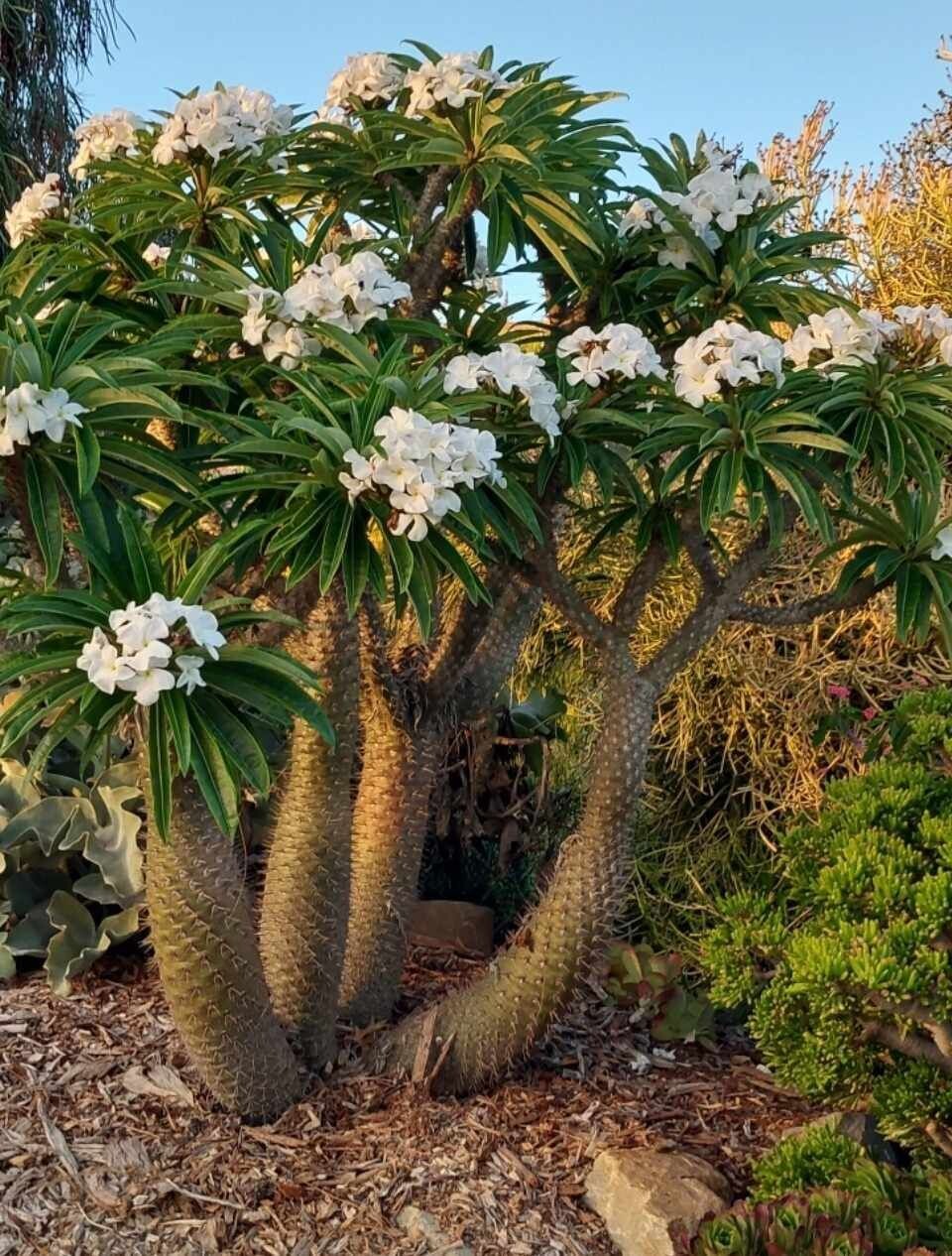
Image Source: cloudfront.net
When mature, Pachypodium plants produce striking flowers, adding to their ornamental value. These flowers, often tubular or trumpet-shaped, come in a range of colors, including white, pink, red, and yellow. The flowers are typically produced at the tips of the branches, attracting pollinators such as bees and moths.
Geographical Distribution and Habitats
Pachypodium species are primarily found in Madagascar and continental Africa, thriving in arid and semi-arid regions. Madagascar, with its diverse microclimates, is home to a particularly rich variety of Pachypodium species, showcasing a wide range of adaptations to different environmental conditions.
Madagascar’s unique flora and fauna are renowned worldwide, and Pachypodium is no exception. Several species, including Pachypodium lamerei, Pachypodium geayi, and Pachypodium baronii, are endemic to the island, meaning they are found nowhere else on earth. They have evolved to withstand the island’s seasonal droughts and nutrient-poor soils.
In continental Africa, Pachypodium species are found in various habitats, from rocky outcrops to sandy plains. They have adapted to survive in regions with erratic rainfall, intense sunlight, and extreme temperatures. Pachypodium succulentum, for instance, is found in the arid regions of South Africa.
Cultivation and Care
Pachypodium plants are relatively easy to cultivate, provided their basic requirements are met. They are ideally suited for indoor or outdoor settings, depending on the climate.
Pachypodium thrive in bright, direct sunlight, mimicking their natural habitat conditions. They prefer warm temperatures and are intolerant of frost. During the winter months, when growth slows, they should be kept in a cool, bright location.
Proper watering is crucial for Pachypodium health. Overwatering can lead to root rot, a common problem in succulent plants. They should be watered thoroughly during the growing season, allowing the soil to dry out completely between waterings. During the dormant season, watering should be reduced significantly. A well-draining soil mix, such as a cactus or succulent mix, is essential for optimal growth.
Pachypodium can be propagated by seeds or cuttings. Seed propagation is generally preferred for species that produce viable seeds. Stem cuttings can also be used, but they require careful handling and a suitable rooting medium.
Popular Pachypodium Species
Numerous Pachypodium species are available for cultivation, each with unique characteristics and aesthetic appeal.
Challenges and Considerations
Cultivating Pachypodium successfully requires attention to certain challenges and considerations.
Overwatering is the primary cause of root rot, a fungal disease that can quickly kill Pachypodium plants. Proper drainage and allowing the soil to dry out completely between waterings are essential for prevention.
Pachypodium plants can be susceptible to mealybugs and scale insects, which can weaken the plant and cause damage. Regular inspections and prompt treatment are necessary.
Understanding the plant’s dormancy and growth cycles is crucial for proper care. During the dormant season, watering should be significantly reduced, and the plant should be kept in a cool, bright location.
Conservation Status
Some Pachypodium species are threatened in their natural habitats due to habitat destruction, overcollection, and climate change. It is essential to purchase Pachypodium plants from reputable sources that adhere to ethical and sustainable practices.
A Testament to Adaptation
Pachypodium plants serve as a testament to the remarkable adaptations of succulents to arid environments. Their unique morphology, resilience, and captivating beauty make them a highly prized addition to any plant collection. Whether you’re a seasoned succulent enthusiast or a novice gardener, Pachypodium offers a rewarding and fascinating glimpse into the diverse world of succulent plants. Their strong forms, and the unique conditions they withstand make them something that many collectors find truly spectacular.
pachypodium